
The Four Core Investor Risks – Part 3 of 7
Valuation Risk

Valuation Risk is the quiet structural risk. It does not announce itself with headlines or flashing red screens. It simply ensures that when you pay too high a price relative to earnings, cash flows, or historical norms, future long-term returns are compressed — even if the underlying businesses continue to grow.
Below is the Cyclically Adjusted Price-Earnings (CAPE) Ratio made famous by Yale economist Robert Shiller. The ratio is currently elevated (in the low-40s range as of mid-2026).
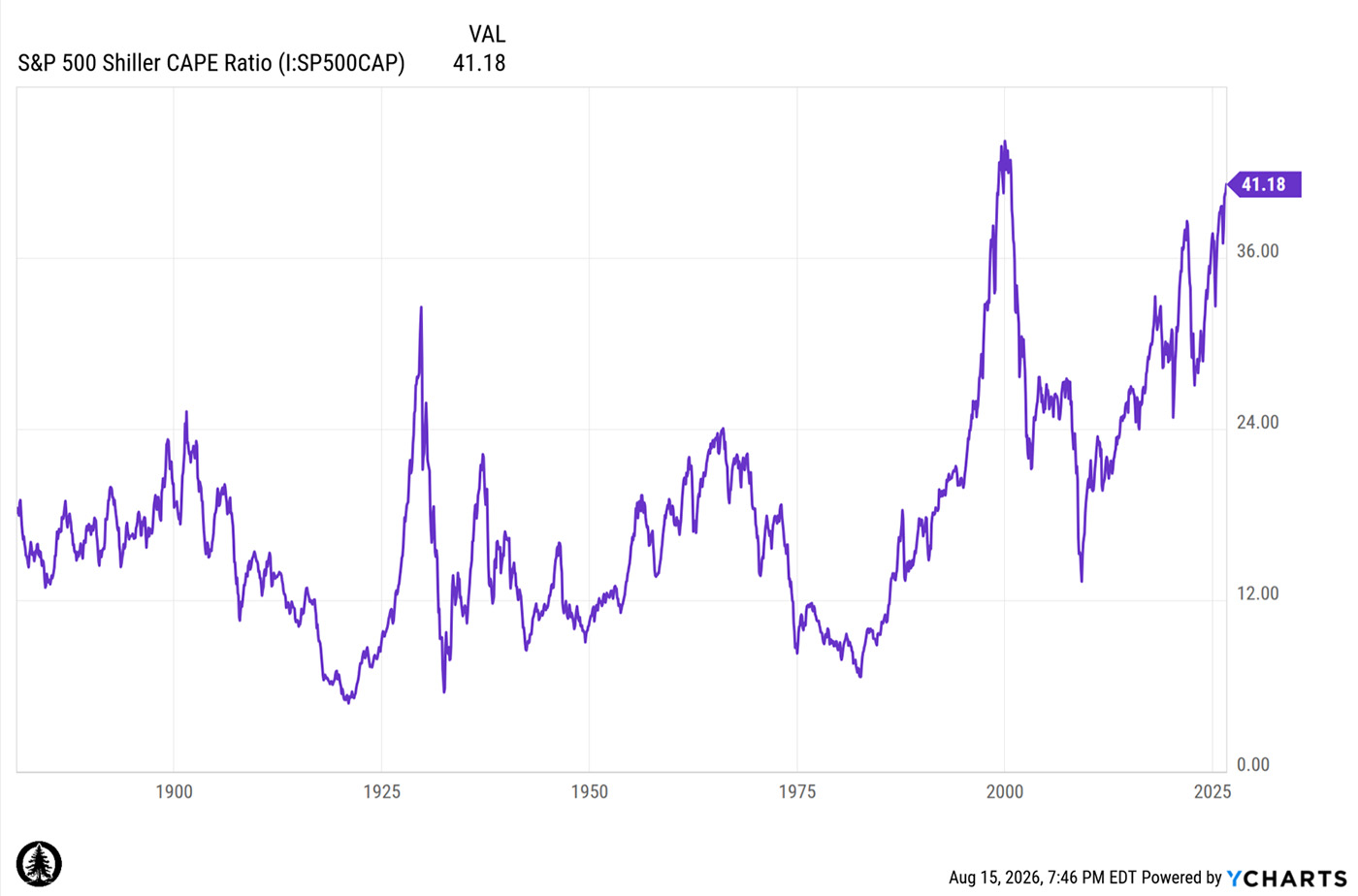
Critics correctly note that moder accounting changes have led to a potential overstatement of valuation extremes. This is a fair point. To address that criticism, we show two additional charts:
-
CAPE versus the adjusted CAPE-H series that corrects for the main accounting distortions of the modern era. Even after adjustment, CAPE remains near the third-highest reading in more than 120 years.
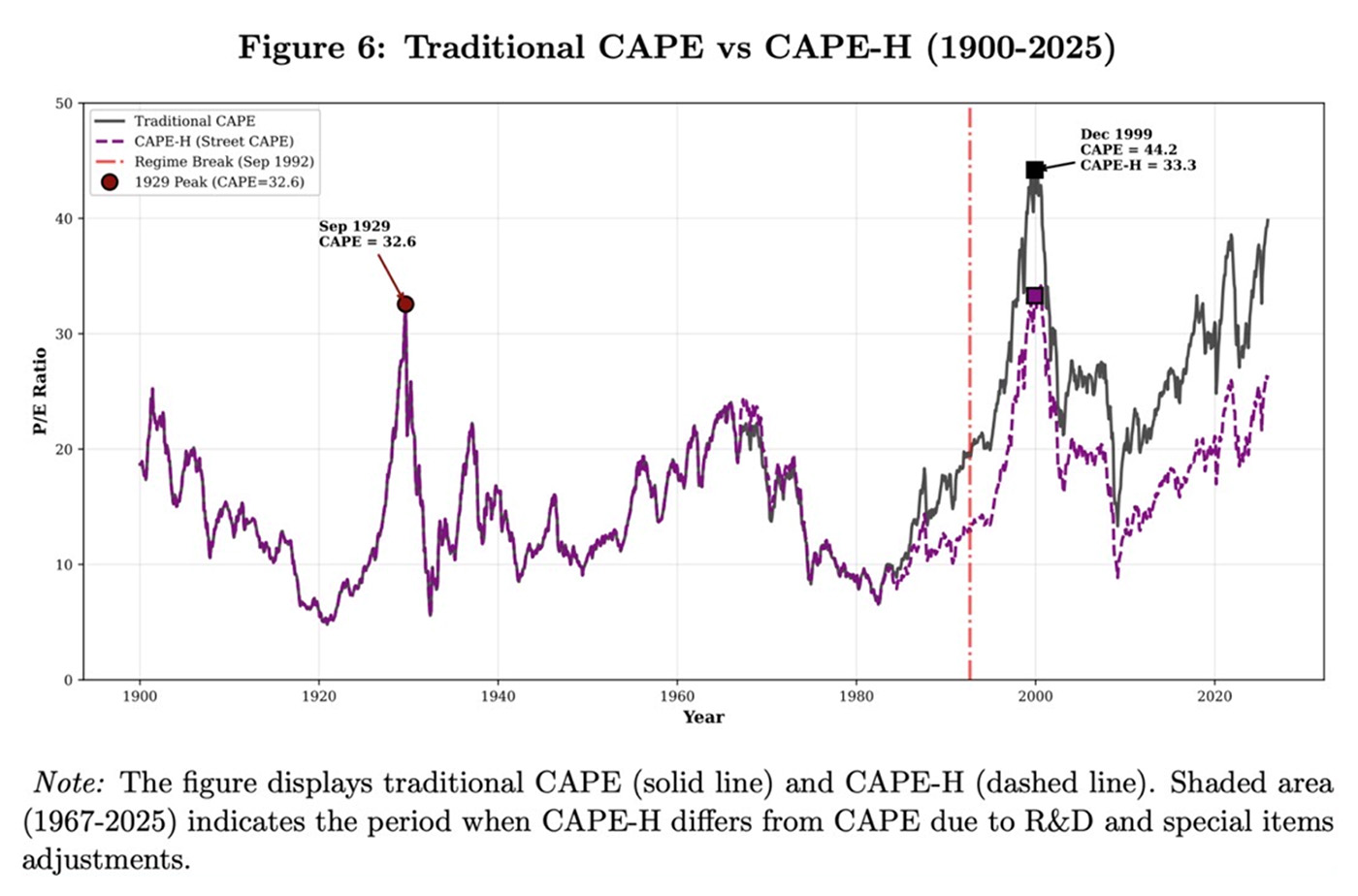
Source: Palazzo, Dino. “The CAPE That Cried Wolf.” Working paper, Board of Governors of the Federal Reserve System, May 2026. -
An amalgam of multiple valuation metrics produced by Bloomberg (Trailing P/E, Forward P/E, CAPE, P/B, P/S, EV/EBITDA, Q Ratio, and Market Cap to GDP). On this composite the market sits at or near all-time highs on a percentile basis.
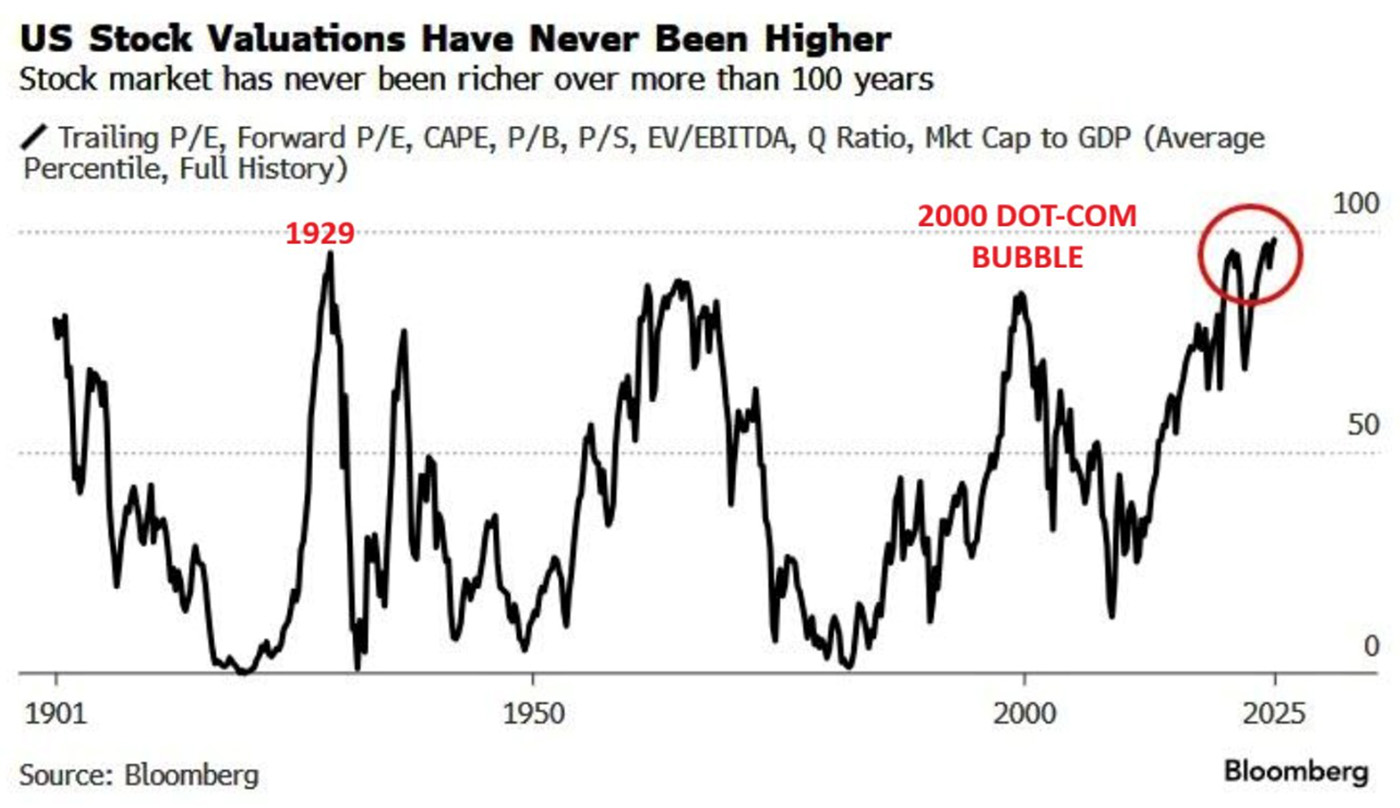
Source: Bloomberg.
Elevated price-to-earnings ratios, CAPE levels, or price-to-sales multiples do not guarantee an immediate crash. They do, however, raise the odds of disappointing decade-long results. Buying excellent companies at mediocre prices still works. Buying them at extreme multiples often does not.
A final chart shows the relationship between month-end CAPE ratios and the corresponding ten-year forward real return of the S&P 500 going back to 1950.
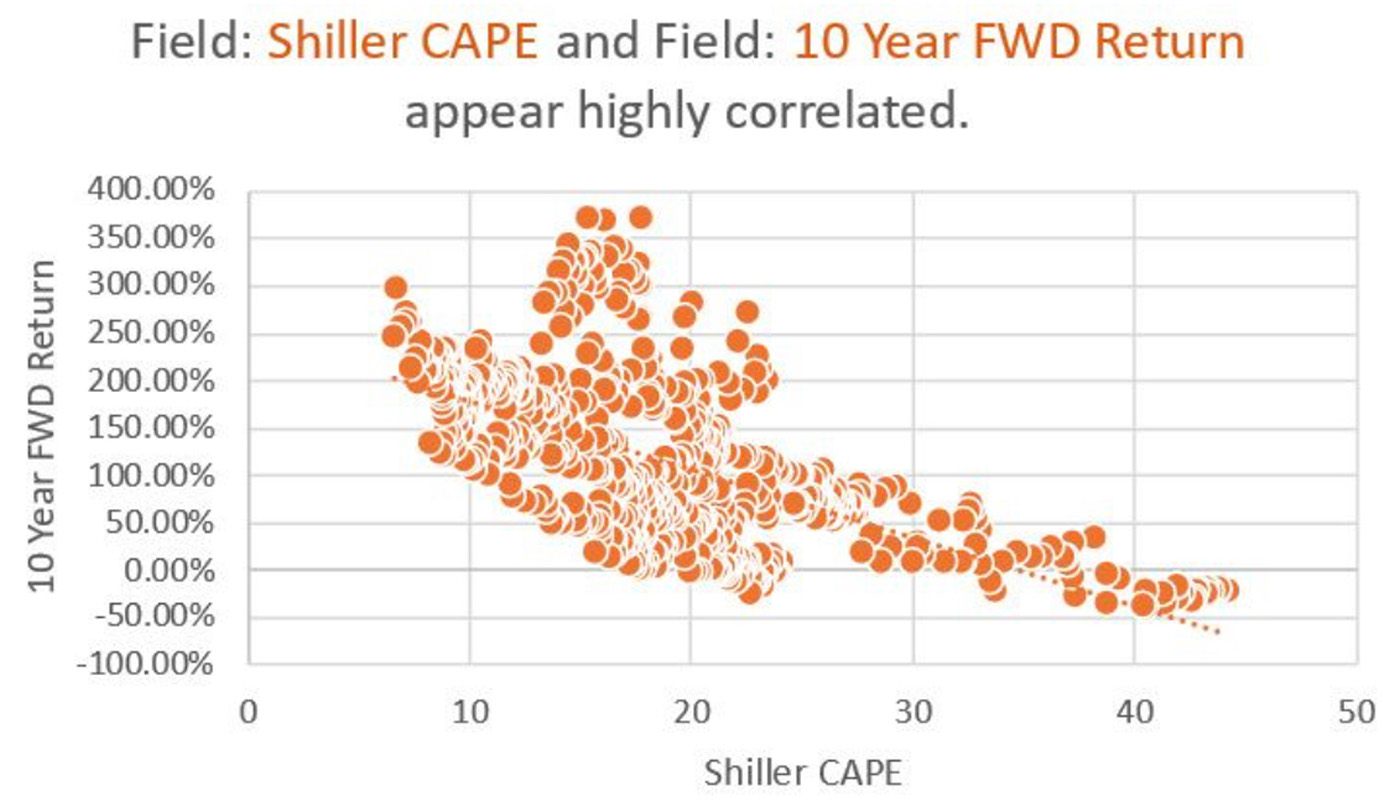
The inverse relationship is strong. With CAPE currently above 40, history suggests lower subsequent returns, higher odds of black swans, and potentially a severe bear market.
Valuation Risk confounds investors because it feels abstract while markets are rising. “This time is different” narratives flourish precisely when valuations are most stretched. The pain arrives years later as muted compounding, and by then the original decision is long forgotten. Rebalancing helps, but only if an investor is willing to sell what has gone up the most — an emotionally difficult act when everything still looks expensive and “safe.” Valuation Risk is patient. It does not need a crisis to do its damage. It simply waits for time and mean reversion to do the work.
Key points
- Multiple independent valuation composites currently place the market near multi-decade extremes.
- High starting valuations have historically been associated with lower subsequent decade returns.
- The risk is structural and slow-moving, not a short-term timing signal.
Next in the series: Timing Risk.
Comments